Why Everyone Got the Same Toll Text: The Smishing Kit Business
Toll and delivery texts look like random spam, but court filings and threat research describe a subscription industry with templates, licenses and lure cycles.

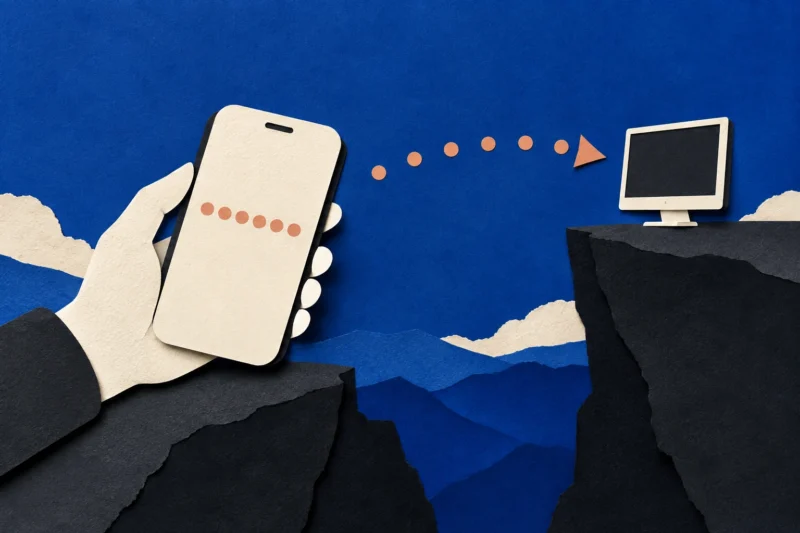
“Unpaid toll: $12.51. Pay now to avoid a $50 late fee.” If you live in the United States, you have probably received some version of that message, or one about a parcel that could not be delivered. Your neighbor got it too. So did people in other states, other countries and, a year later, people who have never driven a toll road. The message is not personal. It is a product, and the people sending it are, in many cases, customers.
Court filings and threat-intelligence reports from 2024 to 2026 describe the infrastructure behind these texts as a subscription business: developers sell phishing kits, others supply phone numbers and domains, and buyers run the campaigns. Seeing the industry explains why the texts look identical, why they change topic every year and why blocking one wave changes little.
$88 a week or $200 a month, according to Google’s June 2026 complaint against the “Outsider” kit.
Unit 42 counted 194,345 domain names in one campaign; 71.3% were active for less than a week.
Resecurity estimated that 1,000 smishing messages to UK consumers cost about $8.00 in early 2025.
A message is the last step of a long chain
In October 2025, Palo Alto Networks’ Unit 42 published an analysis of a global smishing campaign it attributed to the cluster researchers call the Smishing Triad. It counted 194,345 fully qualified domain names on 136,933 root domains, all registered since January 1, 2024. The U.S. Postal Service was the most impersonated single brand, and toll services were the largest category, with nearly 90,000 domain names. Unit 42 described the operation as a phishing-as-a-service supply chain that is “highly decentralized, lacking a single point of control.”
The roles below come from Unit 42’s description and from Google’s complaints. The right-hand column is our reading of why each role makes the system resilient.
| Role | What it supplies | Why it matters |
|---|---|---|
| Kit developers | Templates that copy real brands, an admin panel, live data capture | One developer’s work is reused by hundreds of buyers |
| Data brokers | Lists of phone numbers | Targets are bought in bulk, not chosen individually |
| Domain sellers and hosts | Thousands of short-lived lookalike domains | Blocking a domain removes one of thousands |
| Spammers | Delivery over SMS, RCS or iMessage | Sending is cheap and separate from the scam’s design |
| Operators | The campaign itself, and turning stolen cards into money | The people with the most to lose are furthest from the message |
What a subscription looks like
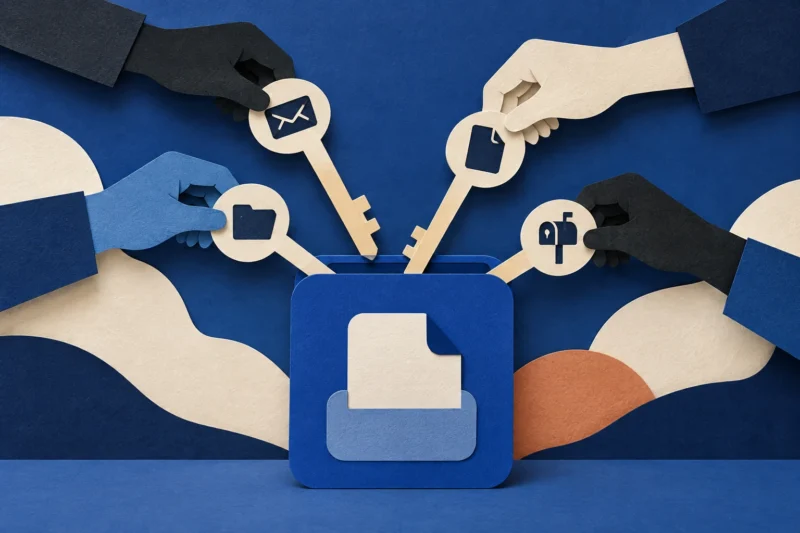
The most detailed public description comes from a complaint Google filed on June 12, 2026 in the Southern District of New York against the unnamed operators of a kit called Outsider. The complaint says licenses are sold through a Telegram bot and cost “$88 and $200” for a week or a month, paid in the stablecoin USDT, and that “From August 2025 to March 2026, Enterprise members purchased more than 250 licenses.” It alleges the kit offers “more than 290 pre-built templates,” at least 131 of them mimicking U.S. institutions, and that it “has been used to create over a million phishing websites.”
These are allegations in a civil complaint, not court findings. But they describe something the texts themselves suggest: the person who sends you a fake toll notice did not have to design the page, write the text or register the domains. They bought a license.
Group-IB’s September 2026 analysis places Outsider within the wider Smishing Triad ecosystem and puts the structure bluntly: “The Triad is not a single team but a marketplace.” It describes operators watching victims’ keystrokes live, with commands to redirect a person mid-session, for example to ask for a one-time code.
A calendar of lures
Why did toll texts arrive in 2024 and 2025 when parcel texts had dominated before? The Outsider complaint offers an explanation from inside the business. It says that as public awareness of one lure rises, its effectiveness falls, and “the Enterprise then responds by shifting its focus to a different industry.” The complaint sets out the sequence:
- January 2023: scammers “predominantly targeted shipping companies.”
- 2024: after awareness campaigns about parcel scams, they moved to brokerage firms.
- Early 2025: toll authorities.
- Then a further pivot to telecommunications companies.
The FBI’s April 2024 alert on toll texts fits that timeline. It reported “over 2,000 complaints” in about a month, from at least three states, with texts quoting an “outstanding toll amount of $12.51.” Note the date: it is often misreported as 2025.
The lure rotation is a useful lesson in itself. Warnings about a specific brand work, and the market responds by changing the brand. Awareness campaigns that teach “toll texts are fake” buy time. Those that teach the underlying pattern, a payment demand arriving by text with a link, last longer. We made the same argument about how urgency removes the second opinion: the topic changes, the pressure structure does not.
Scale, and how to read it
Several research groups have published numbers, and they measure different things.
| Source | Figure | What it counts |
|---|---|---|
| Silent Push, April 2025 | About 25,000 domains in use in any 8-day period; more than 1 million page visits in 20 days | Infrastructure and traffic, not victims |
| Unit 42, October 2025 | 194,345 domain names; 29.19% active two days or less | Domains linked to one cluster since January 2024 |
| Google, Lighthouse complaint (as reported), November 2025 | More than 1 million victims in 120 countries | Google’s allegation, not a court finding |
| FBI IC3, April 2024 | Over 2,000 toll-text complaints in about a month | People who reported to the FBI |
The Silent Push report counts infrastructure; complaint data counts the small share of people who report. Neither tells you how many people lost money. Our guide to why cybercrime reports use different denominators applies here as well: a million page visits and two thousand complaints can both be accurate.
What lawsuits can and cannot do
Google has filed several civil suits against kit operators. Krebs on Security reported the November 12, 2025 complaint against the operators of a kit called Lighthouse, brought under racketeering, trademark and computer-fraud laws. Two days later, according to CyberScoop, Google said Lighthouse “had been shut down,” and researchers saw its Telegram channels deleted. They described it as disruption, not a confirmed takedown. Google’s own litigation page lists the Lighthouse, Darcula and Outsider cases; we found no judgment in any of them.
Civil suits against anonymous defendants abroad rarely end in damages. Their value is elsewhere: they let a company seek court orders against domains and accounts, and they put the business model on the public record. The June 2026 complaint is a more detailed description of the kit economy than most threat reports.
Where friction belongs
If the system is a marketplace, the useful pressure points are its shared dependencies. Read across the sources, three stand out.
- Domains. Unit 42 found 68.06% of root domains in its dataset at one Hong Kong registrar. Concentration like that is a point where registrar policy can matter more than any individual warning.
- Message delivery. Spam over SMS, RCS and iMessage is the stage where a carrier or platform can filter at volume. A text that arrives inside a trusted messaging app borrows that app’s credibility, as we discussed in when trust moves with a conversation across channels.
- Brands’ own payment habits. Toll agencies, carriers and delivery firms that never request payment by text with a link make the lure easier to recognize. Every legitimate “pay by link” text keeps the format familiar.
None of this makes individual caution pointless. It changes its role. A person who ignores a toll text has protected themselves, but the business behind it only notices when its shared tools stop working.
Sources
- Google LLC v. Does 1–25, complaint (S.D.N.Y., filed June 12, 2026): Outsider license prices, templates, lure sequence.
- Global smishing campaign analysis (Palo Alto Networks Unit 42, October 2025): domain counts, lifespans, supply-chain roles.
- Smishing Triad, Outsider and JWR (Group-IB, September 14, 2026): marketplace structure, live operator controls.
- Smishing Triad (Silent Push, April 10, 2025): domain volume and traffic.
- Smishing Triad targets toll payment services (Resecurity, April 8, 2025): message cost estimate.
- Smishing Scam Regarding Debt for Road Toll Services (FBI IC3, April 12, 2024): complaint count and example text.
- Google sues to disrupt Chinese SMS phishing triad (Krebs on Security, November 2025) and CyberScoop (November 2025): Lighthouse suit and disruption.
- Google affirmative litigation (Google): case list and status.
Found a factual error or a source that has changed?
Send a correction →