The Search Result Is Not the Biller: Understanding the Payment Handoff
A bill-pay page may belong to an intermediary rather than the company you owe. Examine affiliation, fees, delivery, and confirmation before paying.
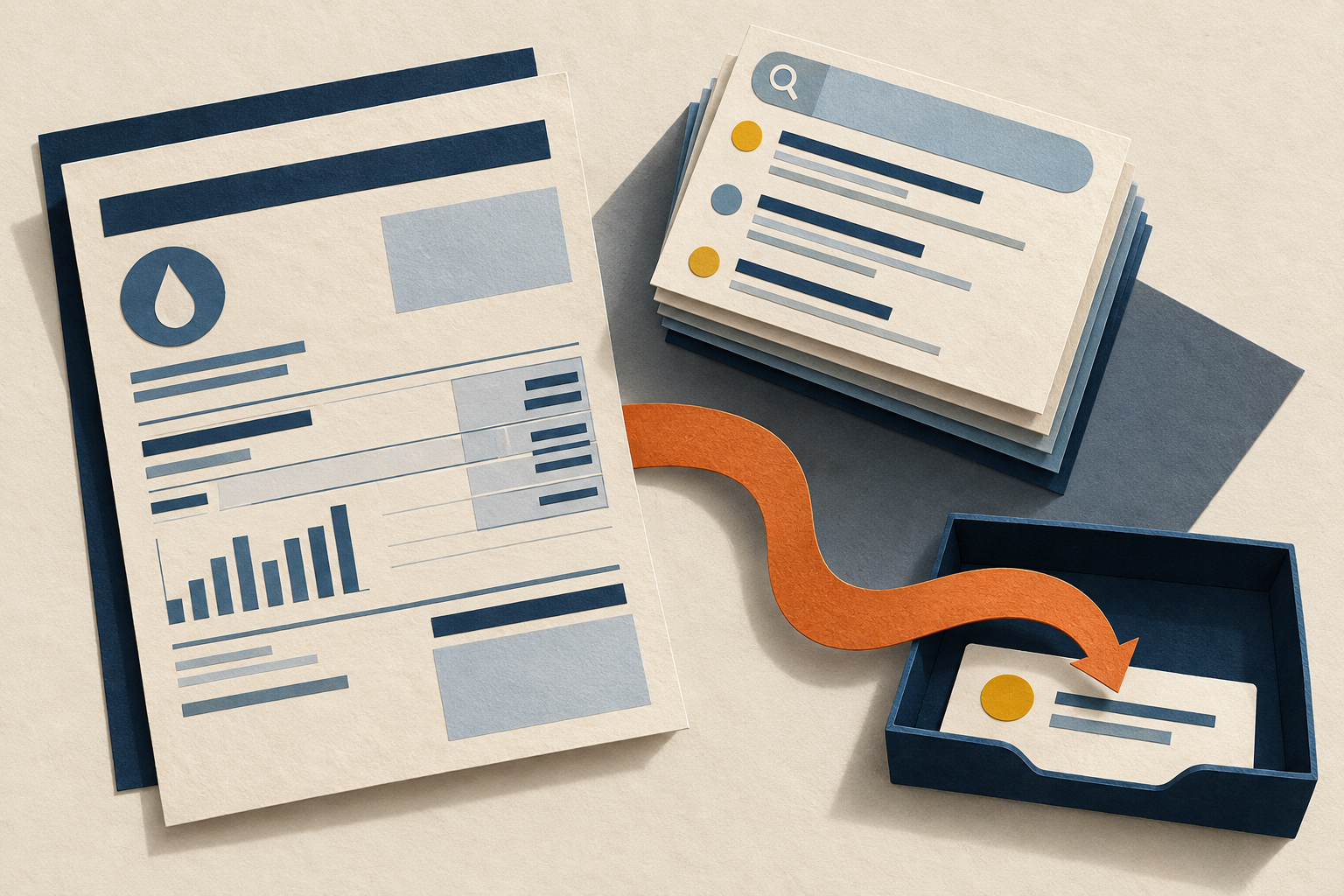
You have a real bill and a simple goal: pay the company you owe. A search result uses the company’s name, the next page looks relevant, and a payment form appears. It is easy to treat that sequence as one continuous journey to the biller. The important question is whether the journey changed organizations without making that change clear.
The FTC’s August 2026 warning about bill-pay impersonators describes paid search results that can lead consumers to a third-party service rather than the intended company. The issue is not that every intermediary is fraudulent. It is whether the user understands who is receiving the payment instruction, what fees apply, and when the biller will receive the funds.
Who operates the page you are using?
What will be charged beyond the amount on the bill?
Does the biller’s own account show the payment as received?
The current case needs careful language
In its August 2026 Doxo settlement announcement, the FTC described allegations involving misleading affiliation, fees, and subscriptions. It announced a proposed order and a $2.1 million payment for consumer redress. The agency also described a court finding concerning subscription disclosures and consent. A proposed settlement announcement should not be rewritten as a claim that every transaction through the service was theft.
The broader design question is useful even without naming a particular company: at what point does a consumer learn that they are authorizing an intermediary? If the distinction appears only after the user has mentally committed to paying a bill, the interface may be asking a different question from the one the user thinks they are answering.
Search relevance can feel like authority
A result can be relevant to a biller’s name without being operated by that biller. Paid placement, matching keywords, and a familiar logo can make a page easy to find. Those cues do not independently establish a business relationship or the terms of a payment service.
In an illustrative journey, a person searches for a laboratory’s payment page after receiving a statement. The result repeats the laboratory name, so they stop looking for evidence of the operator. They then interpret the checkout as a payment to the laboratory rather than a separate instruction to a service that may send payment onward.
This is a handoff problem: the user carries trust from the search task into the payment interface. Our analysis of unverified support numbers in search answers concerns a similar transfer. A platform can help locate information without endorsing every organization or instruction presented within it.
Four states that should not be collapsed into “paid”
| State | What it tells you | What to check next |
|---|---|---|
| Payment instruction submitted | A service accepted your request | Recipient, amount, fees, and delivery terms |
| Funding source charged | Your bank or card shows a charge | Whether and when the biller receives funds |
| Payment delivered | The service says funds were sent onward | The biller’s own posting or acknowledgment |
| Bill credited | The intended account reflects the payment | Remaining balance and any discrepancy |
Actual services may use different labels and processes. The table is not a description of every provider’s settlement system. It is a reminder that a receipt from one organization and a credit on another organization’s ledger are not necessarily the same event.
Start from the bill, then verify the bill
A previously established account portal, an official app already in use, or the payment instructions on a genuine statement can provide a better starting point than an unfamiliar search result. But a bill itself can be forged or altered. If the statement is unexpected or its payment details changed, verify those details through a route you already trust.
Do not use a new phone number merely because it appears beside an urgent payment demand. Compare with existing account information or reach the company’s official service independently. The point is to avoid letting the same unverified message supply both the request and the supposed confirmation channel.
For a household, saving a verified biller bookmark can reduce repeated searching. For a business, maintain controlled supplier payment information and a process for changes. Neither is a permanent guarantee: bookmarks and records can become outdated, so unexpected changes still deserve examination.
Questions worth answering before checkout
- Who operates this page? Look for the legal or trading identity, not just the name of the company you intend to pay.
- Is it an official payment channel or a separate service? Verify a claimed relationship independently if it matters to your decision.
- What is the total cost? Separate the bill amount, delivery or processing fees, and any recurring subscription.
- When will the biller receive the money? A submission deadline is not necessarily a delivery deadline.
- What happens if something goes wrong? Know which organization can explain the charge and which can confirm the account balance.
A transparent intermediary can answer these questions without pretending to be the biller. The issue is informed choice, not an assumption that only one technical payment route can ever be legitimate. Some people intentionally use third-party services; they should understand the tradeoffs rather than discover them after a charge.
When the due date creates pressure
A looming deadline makes a convenient result feel more attractive. That is exactly when delivery timing matters. Before using an unfamiliar route, ask the biller through its verified channel which payment options can meet the deadline. Do not assume a prominent “pay now” button guarantees same-day credit.
If a payment has already been initiated, avoid immediately sending a duplicate simply because the balance has not updated. Contact the relevant service and the biller, record the status, and ask about cancellation, tracing, or other available options. A duplicate may create a second problem without resolving the first.
This is general process guidance, not a promise about a provider’s rights, refund obligations, or posting times. Those depend on the actual service and circumstances. Keep the written terms and the transaction record so that the conversation can address the specific payment rather than a vague memory of the checkout.
A receipt is evidence, but of what?
Read the receipt for the operator, payee details, account reference, amount, fees, and expected delivery. It may confirm that the intermediary accepted an instruction, not that the creditor considers the bill settled. Match the reference with the biller’s own account when the payment should have arrived.
Keep a copy privately. Do not post an unredacted receipt in a public forum to ask whether the service is legitimate. Account numbers, addresses, and transaction identifiers can reveal more than the question requires. A sanitized description may be enough for general discussion; the full record belongs with the relevant provider or authority.
Our piece on sharing incident evidence carefully explains the same principle. Evidence should help resolve the problem without becoming a second exposure. More publicly visible detail is not automatically better evidence.
If the page was not what you thought
First establish what happened. Did you only visit the page, create an account, submit a payment instruction, authorize a subscription, or disclose credentials used elsewhere? These are different exposures. A response should match the action rather than treating every unexpected intermediary as a full account takeover.
Use official support routes to ask about cancellation, fees, delivery, and any recurring plan. If a charge is disputed or appears unauthorized, contact the funding provider and describe it accurately. Do not assume that a refund is guaranteed, and do not accept a new unsolicited caller as the provider merely because they know details of the transaction.
If you reused a password on the unexpected service, change it on other affected accounts through their genuine settings and review account security as appropriate. Do not enter more information into a page solely because it claims that doing so will unlock a refund.
Make the next payment easier to verify
If you help another household member pay a bill, explain the route rather than simply taking over the device. Show which organization operates the portal and where the biller’s own confirmation appears. That makes the next payment easier to handle independently and reduces reliance on a remembered search phrase that could lead somewhere different later.
Keep saved payment details private and avoid emailing complete card or account information to make future payments more convenient.
What billers can improve
A biller can make its legitimate route easier to recognize by publishing clear payment instructions, explaining authorized third-party arrangements, and describing expected processing times. Customer service should be able to distinguish a payment sent through an intermediary from a direct payment without blaming the customer for the confusion.
When warning customers about misleading results, avoid sending them back into another vague search. Provide a clear official starting point through established communications. Explain what information a genuine support interaction will require and what it will never need, such as a customer’s password or authentication code.
The central lesson is not “never use search” or “all payment services are scams.” It is to notice when the organization handling the task changes. A relevant result, an accepted charge, and a settled bill are three different facts. Keeping them separate gives the user a better chance to make the choice they actually intended.
Found a factual error or a source that has changed?
Send a correction →