You Gave Before, So the Prize Call Feels Real
Charity-sweepstakes impostors use a donor’s past giving as proof. What the FTC says, what is known about donor-list supply, and where reciprocity fits.

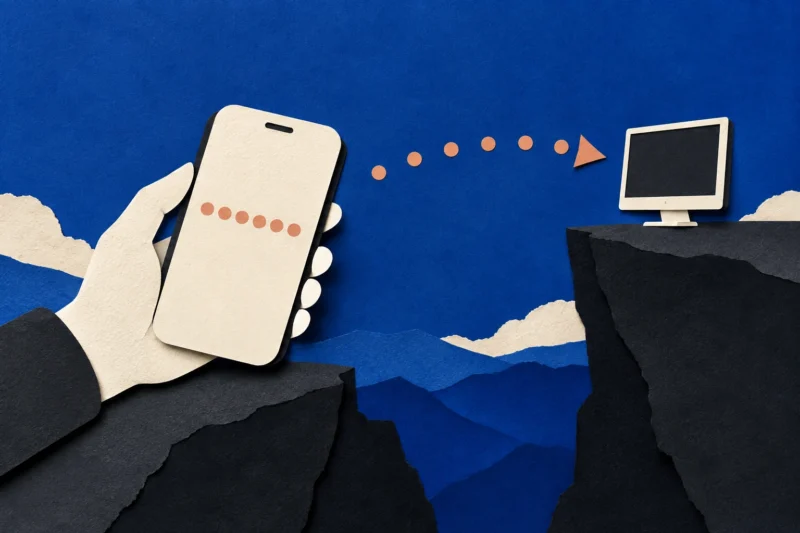
On October 26, 2026, the FTC published a short alert titled “Spot scammers impersonating well-known charities and sweepstakes.” Its central description is brief: scammers pose as reputable charities and tell people they have won a charity-sponsored sweepstakes, “often because the victim previously donated.” Contact usually comes by phone, though ads on social media or elsewhere also appear.
That one clause carries the whole design. The caller does not need to prove who they are if the listener already has a relationship in mind. Past generosity becomes the credential.
What the alert says, and what it leaves out
Read the FTC alert closely and it is a plain document. Real charities, or organizations with names that sound like real ones, are impersonated. Scammers may also impersonate government agencies or companies through caller ID. The clearest sign of a scam is a demand for payment: “The moment someone tells you to pay to claim your prize, you know you’re dealing with a scam.” Legitimate sweepstakes are free and based on chance, and it is illegal to require payment or a purchase to enter or to improve your odds. Caller ID can be faked. Search a charity’s name with words like “complaint” or “scam” and scroll past paid ads.
What it does not do is explain how scammers know who has donated. The alert contains no figures and says nothing about the source of the contact information. That gap is worth marking before anyone fills it with confidence.
The idea of reciprocity, and why it fits only partly
Reciprocity is the tendency to give back what has been given. Robert Cialdini counts it among his principles of persuasion; the official Influence at Work page defines it as people being “obliged to give back to others the form of a behavior, gift, or service that they have received first.” The classic experiment is by Dennis Regan (1971, Journal of Experimental Social Psychology, vol. 7, pp. 627–639): in secondary accounts, a participant who was handed a soft drink by a fellow participant went on to buy roughly twice as many raffle tickets from that person as someone who got no favor. We have not opened the paper and describe it only as those accounts do, which differ on sample size and details.
Now apply it here. In the charity-sweepstakes story, the donor gave first. If anything is owed, the donor is the creditor. The impostor’s move is to reverse the books: they appear to repay, with a prize, and the donor accepts a small ask, a fee or a bit of personal information, to complete a transaction that feels already earned. So reciprocity is present, but not in the textbook direction. Two other things are doing as much work:
- A prior relationship as proof. “You gave to us last year” is a specific and flattering claim. It bypasses the usual question of why a stranger is calling.
- Self-image. Someone who thinks of themselves as generous is more likely to respond warmly to a charity call. The scam is built to meet that self-image halfway.
This is our interpretation of the mechanism, not a finding from the FTC or from Regan’s experiment. We flag it because the “reciprocity” label gets applied loosely, and the loose version suggests the wrong remedy.
Where the donor’s details could come from
The FTC alert does not say, so we looked for documented cases. The best-documented one we found is old and from the United Kingdom, so treat it as an illustration of a pathway, not a measure of the U.S. today.
In a 2015 story syndicated by SWNS and carried by Yahoo News UK, the son of an 87-year-old man with severe dementia used Freedom of Information requests to trace how his father’s details spread after a 1994 lifestyle survey. By the family’s account, the man’s details were passed on 200 times to 88 charities and 12 scam firms, he was contacted about 700 times, and he paid about £35,000 in total. The manager of the National Trading Standards Scams Team was quoted as saying that scam companies bought these lists knowing the people on them were vulnerable. One charity said it obtained appropriate consent and no longer shares such data; another said it uses recognised list brokers and was reviewing its practices. The article reports no formal regulatory finding, and we have left the organizations unnamed because they are described only through the family’s account and their own statements.
A single UK case from 2015 cannot tell us how many U.S. donors are on lists, who sells them, or whether the practice has changed. What it shows is the structure: personal data collected for one purpose moves through intermediaries, and somewhere along the chain a buyer is not a charity.
Known: the FTC describes impostors who cite prior donations. Documented elsewhere: donor data can pass through brokers to buyers who run scams (one UK case). Not established in the sources we read: how the impostors in the FTC alert obtained their lists.
Why a legitimate charity’s call and a fake one can sound alike
Charities do call their donors, and thank them, and run prize draws in some places. A listener cannot tell a genuine thank-you from a scam by tone, because both are warm and both mention prior giving. The differences lie in structure:
| Feature | Genuine outreach | Impostor pattern in the FTC alert |
|---|---|---|
| Cost to claim | None | A payment or personal information such as a Social Security number |
| How you verify | Your own contact route to the charity | A number or link the caller supplies |
| Caller ID | Not proof either way | Can be faked |
| What follows after you pay | Not applicable | More calls, mail and spam about sweepstakes, according to the alert |
The row on payment is the only one with a bright line. Everything else needs a second route. For the pattern of insisting on privacy, see when confidentiality becomes a tool of coercion; for how borrowed credibility builds, see followers, testimonials and busy group chats.
What responsibility lies with those who hold the lists
If donor lists are one input, then the owners of those lists have a part in the problem. An organization that collects donor data can ask a few questions before sharing or renting it: who are the end buyers, what do contracts require of them, and is there a way for a donor to opt out that works? None of the sources we read proves that U.S. charities are doing this badly. The 2015 case shows what the failure looks like if they are, and it is cheap to check.
For donors, there is a modest practical step that does not involve distrust of giving. When you donate, you can ask whether the organization shares donor information and whether you can opt out. And when a call mentions a prize, the move that fits the FTC’s advice is the one that needs no judgment about tone: end the call, and if you want to know whether the charity is real, find its number yourself.
Talking about it without a lecture
People who give to charity tend to be the kind of people who respond when asked. A conversation about prize calls that implies they were naive will end it. A better opening is a fact about the system: “The FTC says these callers often pick people who have donated before.” That makes the donor a target of selection, not a fool.
Two sentences that can be said in advance and in a friendly tone: “If anyone says I have to pay to collect a prize, I hang up,” and “If a charity I know calls, I phone them back on the number on their mailing.” Agreeing on them before the call arrives removes the decision from the moment. Our article on keeping the conversation open describes why the tone of the first conversation decides whether there is a second.
The same applies inside a charity. A development team that wants donors to respond to genuine thank-you calls should tell them, in the first thank-you, that the charity never asks for payment to deliver a prize. That sentence costs nothing and arms every donor against the impostor’s opening line.
What to take from the psychology
Naming a principle can make a scam sound more mysterious than it is. The practical content is modest: a caller who mentions your past generosity has told you they have a list, not that they are your charity. The list may be real, and the fact that you are on it is the only thing they know about you. Treat the detail as a sign of data, not of identity.
Sources
- Spot scammers impersonating well-known charities and sweepstakes (FTC consumer alert, October 26, 2026).
- The 7 Principles of Persuasion (Influence at Work): definition of reciprocity.
- Regan, D. T. (1971). Effects of a favor and liking on compliance. Journal of Experimental Social Psychology, 7(6), 627–639. DOI: 10.1016/0022-1031(71)90025-4 (citation confirmed; paper itself not opened).
- Widower with dementia becomes target of £35k fraudsters (SWNS via Yahoo News UK, updated September 1, 2015): the UK donor-data case.
Found a factual error or a source that has changed?
Send a correction →