Swatting Is Social Engineering With a Community as the Target
A false emergency report can trigger a real response. The safest public guidance is less about decoding a hoax in real time and more about calm, trusted procedures before and after an incident.
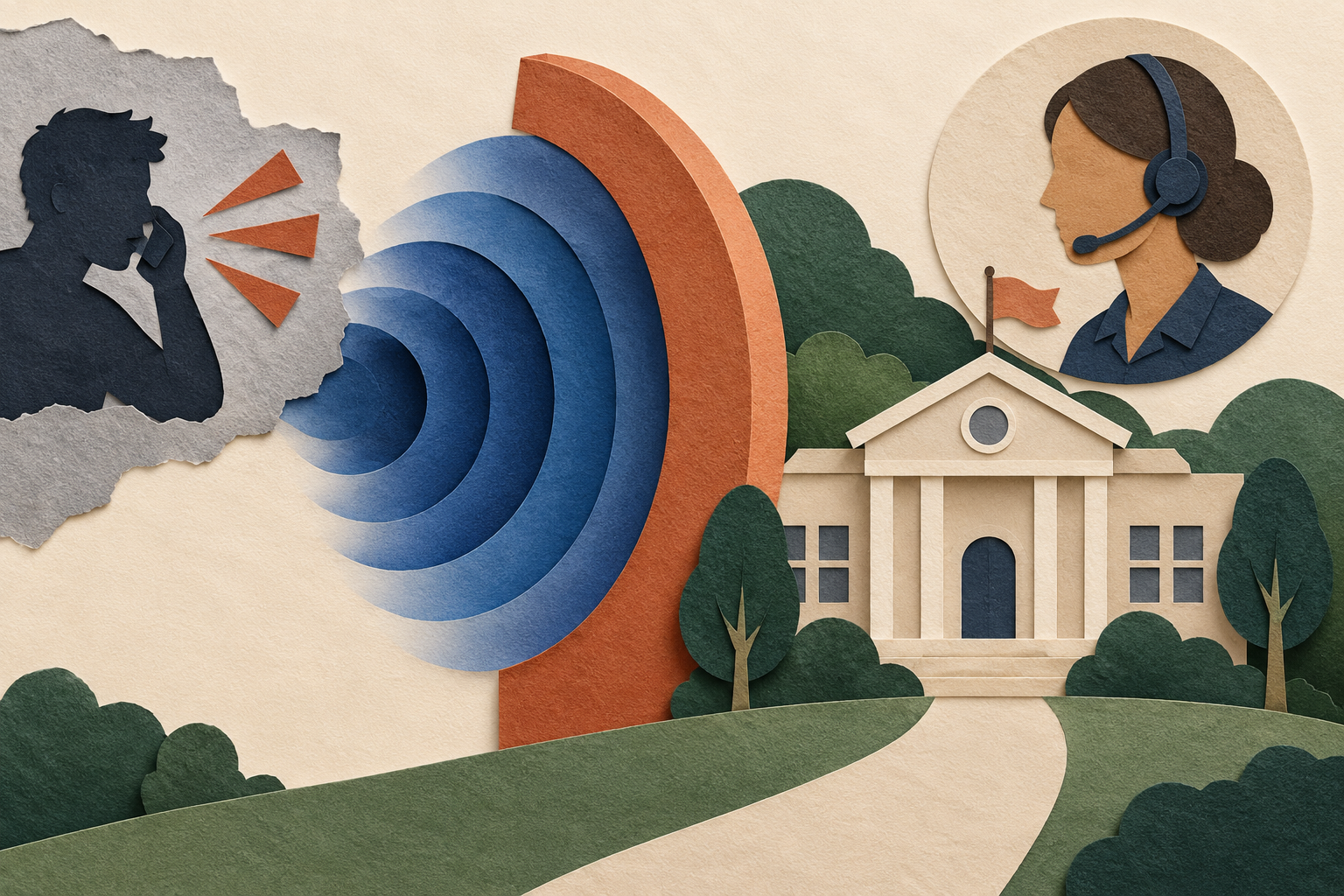
A school day, council meeting or community event is interrupted by a frightening report. People hear fragments: there may be a threat; responders are on the way; a building could be unsafe. The report may later prove false, but the dispatch, disruption and fear are real. That mismatch is the point of swatting: a false emergency report is used to provoke a serious response against a person, institution or public place.
In an August 4, 2026 public service announcement, the FBI’s Internet Crime Complaint Center described swatting reports aimed at schools, government and religious institutions, transportation sites, hospitals and other public locations. The alert warned that coordinated reports can involve more than one location. It is a reminder that a person receiving a threatening claim is not the only target: dispatchers, responders, staff, families and bystanders can all be pulled into a manufactured crisis.
This is social engineering because the attacker is trying to manipulate a human decision system. The target can be an emergency dispatcher who must assess a report, an organization that must protect people, or an online audience that may amplify a rumor. The harm is not limited to whether the initial claim is true. A needless response can close a school, frighten families, interrupt medical care and expose people to danger in a confusing moment.
The manipulation is in the gap between a claim and a response
Emergency systems are designed to take reports seriously. That is necessary: a genuine threat cannot be dismissed because the caller sounds strange or the details are incomplete. A malicious report exploits this duty. It tries to make ordinary safeguards look like dangerous delay, while giving the audience little time to distinguish confirmed information from rumor.
That means there is no reliable “spot the fake” checklist for a member of the public. An unverified post, an alarming screenshot or a familiar-looking voice is not enough to establish what is happening. Nor should a school employee, family member or community moderator try to investigate a possible active threat by approaching a location, calling unknown people, or posting operational details online. Those tasks belong to the relevant authorities.
During an active emergency, follow instructions from local authorities. Do not turn social media into a parallel dispatch channel.
What a calm response looks like
| Situation | Safer response | Avoid |
|---|---|---|
| You are inside a location and receive direct instructions | Follow the directions of on-scene authorities and the site’s established safety plan. Help others only when it is safe to do so. | Leaving or moving to another area based on a forwarded message, rumor or unverified livestream. |
| You are a parent or family member outside | Use the school, venue or agency’s official update channel. Keep your phone available for direct messages from the institution. | Driving toward the site, calling emergency lines to ask for status, or sharing names and locations of people involved. |
| You see a viral claim online | Pause before reposting. Look for an update from the relevant local authority or institution. | Repeating unconfirmed details, guessing who is responsible or publishing images that identify people in danger. |
| You have concrete information about an immediate danger | Use the local emergency number for a real immediate threat; provide what you personally know and how you know it. | Using emergency services to test a rumor or to obtain general updates. |
Before an incident: make the communication plan boring
Organizations can reduce chaos without trying to predict every possible false report. A school, hospital, venue or municipal office can decide in advance who is authorized to publish updates, which channel families or visitors should check, and how staff will receive instructions if the usual channel is unavailable. The plan should say how to contact people who do not use the organization’s main app, and it should include accessible formats and language needs.
It also helps to define who handles incoming calls and how unverified information is recorded. Staff should not be asked to independently confirm a threat while continuing their ordinary duties. A clear internal escalation path lets them pass a concern to the right person without broadcasting it widely. Exercises should focus on communication, accountability and care—not on rehearsing a sensational scenario in a way that leaves people more frightened.
Families can agree on a modest routine: check the institution’s official channel first, keep contact information current, and avoid calling a child or patient repeatedly if doing so could interfere with safety instructions. A message that says “I am safe; please wait for the official update” can prevent a cascade of anxious calls, but nobody should be pressured to send a message during an active response.
After the all-clear: protect people from the second wave
When authorities say the immediate danger has passed, people still need a careful account of what happened. Institutions should distinguish confirmed facts from questions still under review. They should tell affected people what services remain available, when to expect another update, and where to direct private concerns. If the event affected a school or healthcare setting, consider the needs of students, patients and people who may have been directly exposed to a frightening response.
Online, the second wave can involve blame, doxxing, impersonation or fabricated “inside information.” Do not publish suspected names, addresses, schedules, screenshots of private messages or identifying details about a person who may have been targeted. Preserve relevant posts privately for investigators or platform reports rather than keeping a rumor alive through reposts. Moderators should remove dangerous personal information and point users toward verified updates.
For organizations, a short after-action review can ask: Which channel did people trust? Where did instructions conflict? Who could not receive an update? Did staff know where to escalate information? The purpose is to improve the system, not to punish someone who made a good-faith report. A culture that treats every mistaken concern as misconduct teaches people to stay quiet next time.
Why confidence cues are not proof
Swatting and other high-pressure incidents show why polished signals can be misleading. A voice can sound familiar; a screenshot can look official; a post can be repeated by many accounts. Those cues may affect how a message feels, but they do not establish its origin. Our coverage of deepfake warnings in video meetings makes the same distinction: a confidence indicator can help someone notice uncertainty, but it cannot replace a trusted process.
The FBI’s guidance is not a recipe for public investigation. It is a call to take threats seriously, report them appropriately and reduce the opportunity for false reports to cause secondary harm. If you are not responsible for the emergency response, the most useful role is often simple: stay reachable, follow the official channel, avoid amplifying claims and give responders room to do their work.
Sources
- FBI IC3, public service announcement on swatting incidents, August 4, 2026.
- Ready.gov: preparedness information from the U.S. government.
Found a factual error or a source that has changed?
Send a correction →

