Teams’ New Deepfake Warnings Won’t Prove Who You’re Talking To
Microsoft’s Teams roadmap lists two separate meeting protections for November: identity warnings and third-party synthetic-media signals. Here is what they do, what remains unknown, and why a warning cannot replace independent verification.
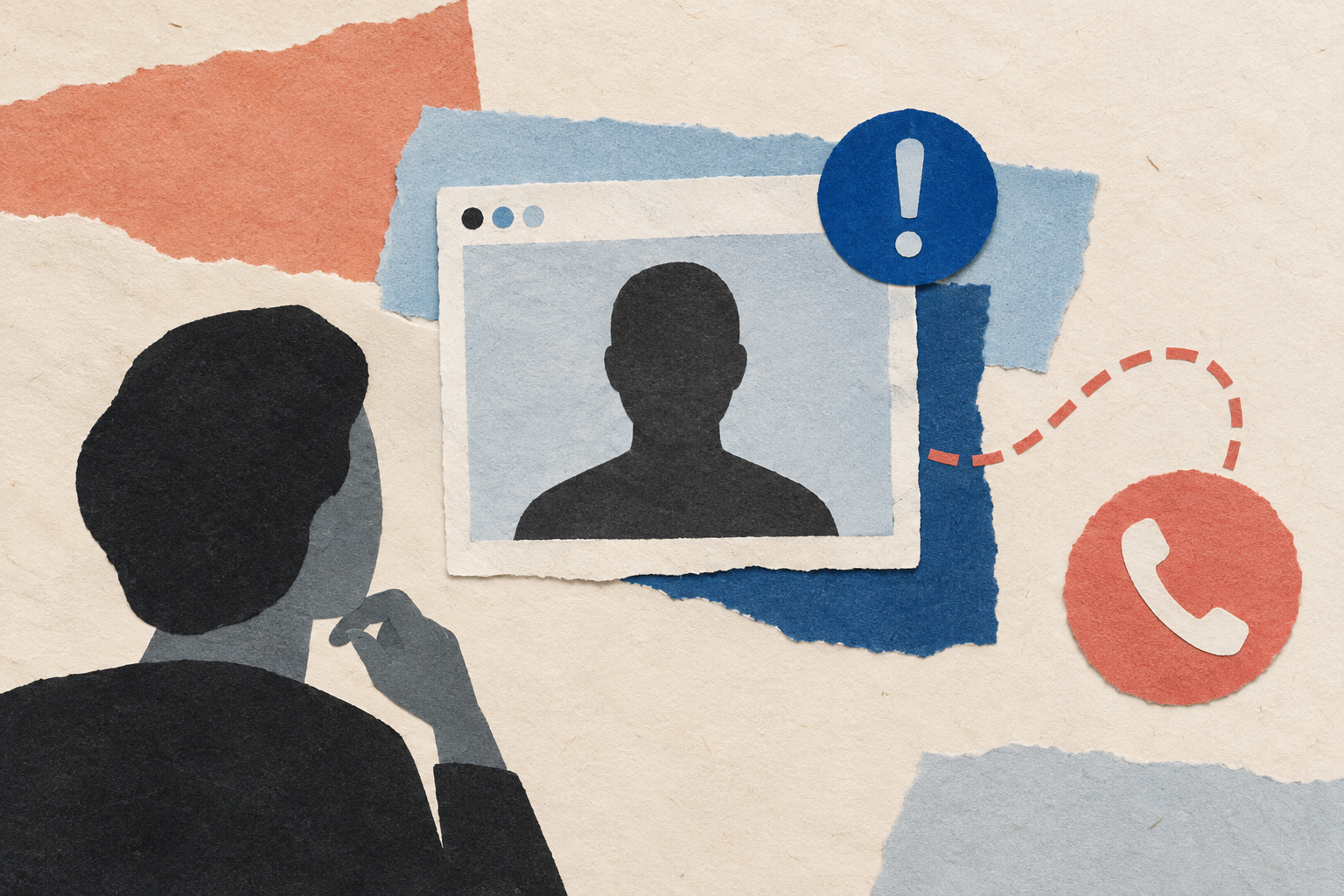
What changed this week: Microsoft’s 365 Roadmap lists two Teams meeting features as in development, with a November 2026 general-availability target: a warning system for potentially deceptive meeting participants or organizers, and an integration that can surface synthetic-audio/video findings from certified third-party providers. Those are separate features. The deepfake analysis is performed by the outside provider—not Teams itself—and both features are plans, not protections every user can rely on today.
The useful takeaway
- A warning is a risk signal, not a verified identity badge.
- A clean screen is not proof that a person is genuine.
- For money, credentials, account recovery, or sensitive data, verify through a separate channel you already trust.
- Ask your IT or security team what the organization’s process is before an urgent meeting request arrives.
The news lands in the middle of a familiar worry: if a video call looks and sounds right, how much should that count as proof? Microsoft’s roadmap offers a useful opening for that conversation, but it does not publish the full detection method, provider list, warning design, error rate, or a guarantee that the feature will identify every impersonator. A feature announcement is not a personal identity check.
Two roadmap items—not one “deepfake detector”
The October 2 roadmap entry for Impersonation Protection for Teams meetings says Teams will surface warnings and risk indicators when it detects a potential impersonation attempt involving a participant or meeting organizer. The stated goal is to help people recognize suspicious identities and make more informed decisions. The item is marked “in development,” with November 2026 listed as its target for general availability. A target is a plan, not proof that every tenant or device will receive it on that date.
A separate entry, Third-party synthetic audio and video detection in Teams, describes integrations with certified external providers. Those providers analyze meeting media for signs of synthetic or manipulated audio and video, send detection signals to Teams, and Teams can surface those signals in the meeting experience. Microsoft explicitly says the detection is performed by the third-party provider; Teams provides the integration and user experience.
| Roadmap item | What it says | What it does not promise |
|---|---|---|
| Impersonation Protection (573157) | Teams can display warnings and risk indicators about potentially deceptive participants or organizers. | It does not say Teams will block every suspicious person or confirm everyone who is not flagged. |
| Synthetic media detection (573451) | Supported third-party tools analyze audio/video and send signals Teams can surface. | It is not Microsoft-only analysis, and the roadmap does not name every provider or publish accuracy rates. |
| Both items | Listed as in development, with November 2026 as the planned general-availability timing. | They are not a feature every Teams user can assume is active now. |
That distinction matters. A system that spots suspicious account or meeting patterns is not necessarily analyzing someone’s face. A synthetic-media detector may examine audio or video cues, but that is not the same as establishing who a person is, whether they are authorized to make a request, or whether a payment instruction is legitimate. The technology labels are easy to merge in a headline; the actual controls answer different questions.
What a warning can help with—and where it stops
A useful alert can interrupt automatic trust. If a person joins unexpectedly, claims to be a senior executive, or asks for an unusual action, a visible warning may give the participant permission to pause. It can add a cue at the exact moment the social pressure is happening, rather than expecting a user to remember a training slide days later.
But detection always has two boundaries: the signal can be wrong, and the absence of a signal can be misleading. A legitimate person might be flagged because their account, device, or meeting context looks unusual. An attacker may not be flagged because the system lacks a signal, the approach is new, or the impersonation looks like ordinary activity. Microsoft’s roadmap does not publish false-positive or false-negative rates for these planned features. No careful article can infer those numbers from a short roadmap description.
Microsoft already documents a separate protection for certain external calls in Teams: a “Scam suspected” notification may appear when an incoming caller is identified as a potential impersonator. Its support guidance says to check whether the call was expected, verify using a trusted channel when necessary, and leave if unsure. It also acknowledges legitimate callers may occasionally be flagged. That is useful context for thinking about warnings, but it is call guidance—not confirmation that the two meeting roadmap features have already shipped.
A Reddit thread asking whether people would trust a video call as proof of identity shows the same underlying discomfort. Some replies focus on technical detectors; others argue for verification rules that do not depend on recognizing a synthetic face or voice. Reddit comments are individual opinions, not security research or a measure of how common deepfake incidents are. They do capture a user-facing question product teams need to answer: “What should I do when the warning is absent, unclear, or wrong?”
The identity check should live outside the meeting
When a request could move money, expose a password, reset an account, change supplier details, or release confidential information, do not let the meeting itself be the only proof. If the request comes from a colleague, end or pause the call and contact them using a number or chat thread you already had on file. Do not use a new phone number, QR code, or “verification link” provided during the suspicious meeting.
For payment changes, confirm with a second authorized person through your normal finance workflow. For account recovery, use the organization’s established help-desk portal or call-back process. For a request involving a customer or vendor, use the contact details in your system of record, not a new address supplied in the meeting chat. Independent verification is not an insult; it is a routine control that protects both the requester and the person being asked to act.
A 60-second pause protocol
- Stop the requested action. Do not approve a payment, reset, MFA change, file release, or remote-access session while you are still trying to decide whether the person is real.
- Record the context. Note the meeting name, organizer, time, account shown, exact request, and any warning displayed. Avoid recording or sharing sensitive content unless your organization’s policy permits it.
- Verify separately. Start a new contact using a previously known number, official company directory, or verified ticket.
- Use the normal approval path. For high-impact requests, involve the second approver or manager required by policy.
- Report uncertainty. Tell IT or security if the meeting looked suspicious, even if you did not click anything. That report may help identify a pattern.
This process works whether a warning appears or not. It also helps with ordinary impersonation that has no synthetic media at all: a compromised real account, a forwarded invite, a borrowed device, or a convincing but genuine voice used in an unexpected context.
What teams can prepare before the features arrive
Organizations do not need to wait for an in-meeting detector to write a simple verification policy. Define which actions require a second channel, who can approve them, and what information an employee should capture when they report a suspicious meeting. Keep the process short enough to follow under pressure. If the rule is buried in a policy library, a confident caller can often outrun it.
Support teams deserve particular clarity. The Canadian Centre for Cyber Security’s May 2026 alert on social-engineering-enabled SaaS compromises describes attackers impersonating IT staff or trusted vendors to push urgent authentication changes, and recommends out-of-band verification for identity-related requests. Its examples include help-desk resets and device enrollment, because those routine processes can give an attacker lasting access if identity checks are weak.
A useful internal standard might say: “No one-time code is read to a caller. No MFA reset is approved solely because a person is visible on camera. A meeting request can start a support ticket, but the ticket and identity checks decide what changes.” That is easier to enforce than “be careful of deepfakes,” which asks workers to diagnose media under pressure without giving them a safe next step.
| Situation | Simple control | Why it helps |
|---|---|---|
| Unexpected executive asks for an urgent transfer | Call a known number and require the ordinary second approval. | Separates identity from the meeting’s urgency and screen. |
| “IT” asks for an MFA reset or code | Open the official help-desk ticket or use the published callback route. | Stops a caller from choosing the only channel used to verify them. |
| Meeting warning appears for a familiar person | Pause, verify through a known channel, then report a false positive if appropriate. | A warning is actionable, but not a verdict about someone’s intent. |
| No warning appears, but the request is unusual | Follow the same verification and approval rules anyway. | Protection cannot depend on one detection system seeing every attempt. |
Security teams should also explain how a report is handled. Tell employees where to send a screenshot or meeting identifier, what information not to include in a public post, and how quickly an urgent report will be reviewed. A person who fears being blamed for a false alarm may stay quiet. A non-punitive reporting path turns “I’m not sure” into useful early information.
Questions readers are asking
Does Teams detect deepfakes itself?
For the synthetic-audio/video roadmap item, Microsoft says certified third-party providers perform the analysis and send signals to Teams. Teams is the integration and surface for those signals. The separate impersonation-protection item says Teams will surface warnings and risk indicators for potentially deceptive meeting identities; its public roadmap text does not describe the detection method.
Are the new meeting protections available now?
The two roadmap entries are marked in development and list November 2026 as the general-availability target. Dates can move, and availability may vary by platform or tenant. Check the Microsoft 365 Roadmap and your organization’s admin notices for current status. Existing call warnings are a separate documented feature.
If there is no warning, can I trust the person?
No. A clean screen is not a verified identity. Use an independent known channel for high-impact requests and follow your organization’s approvals.
Should I accuse a colleague if a warning appears?
No. A risk signal can be mistaken or may reflect an account or context issue rather than malicious intent. Pause the requested action, verify independently, and report the warning through your organization’s security process.
What if the meeting is real but the request is still unusual?
Verify the request, not just the person. A genuine coworker can have a compromised account, misunderstand a policy, or pass along a fraudulent request. For money, credentials, access changes, or sensitive data, use the usual approval and confirmation workflow.
Bottom line
Microsoft’s announcement is a useful sign that meeting identity is being treated as a security problem, not just an etiquette issue. But the two planned features have different jobs, one relies on third-party media detection, and neither is a substitute for a verification process. The safest habit is not to become an amateur deepfake analyst. It is to stop a high-pressure request, move to a channel you already trust, and let a second person or established workflow confirm what happens next.
Sources and further reading
- Microsoft 365 Roadmap 573157: Impersonation Protection for Teams meetings
- Microsoft 365 Roadmap 573451: Third-party synthetic audio and video detection
- Microsoft Support: Protect against impersonation attempts in Teams calling
- Canadian Centre for Cyber Security: Social-engineering-enabled compromise of SaaS environments
- Reddit, r/FraudPrevention: Would you trust a video call as identity proof? (anecdotal discussion)
- INSIDE: How to respond to an unexpected MFA prompt
Reporting note: This article distinguishes announced roadmap plans from features currently documented as available. We’ll update it if Microsoft changes the release status, timing, or technical description.
Found a factual error or a source that has changed?
Send a correction →

